For Taiwan’s Health-Tech Exporters, Dallas Was a Test of Evidence, Not Visibility
By Sam Ellis · Technology & Health Correspondent

Taiwan’s health-technology sector arrived in Dallas with a broad proposition: hospital-developed AI, connected monitoring, medical computing and rehabilitation tools shaped by a digitally mature healthcare environment.
But the more revealing feature of the Smart Healthcare Pavilion at Taiwan Expo USA was not the range of devices on show. It was the range of commercial hurdles still between a promising product and routine use in the United States.
The pavilion ran at the Kay Bailey Hutchison Convention Center Dallas from 24 to 26 September 2026, featuring hospitals and companies working across AI medical solutions, digital health, smart care and rehabilitation, according to Taiwan Expo USA. (taiwanexpousa.com) The supplied GeneOnline announcement describes ten exhibitors at very different stages: some looking for first clinical or commercial partners, others claiming existing U.S. activity or regulatory progress.
That distinction matters. Health technology does not enter a new market simply by translating an interface or finding a distributor. It has to show that its evidence travels, that it suits local clinical priorities and that someone can install, support and sustain it.
A promising clinical tool needs evidence, workflow fit and dependable local delivery before it can become a marketable product.
Validation is the first export challenge
The announcement’s most useful insight concerns hospital-originated AI. Taichung Veterans General Hospital and Chang Gung Memorial Hospital presented technologies developed from problems encountered in their own clinical settings, including emergency-care triage support and HER2 FISH assessment in breast cancer.
That proximity to practice can be an advantage. Clinicians who build a tool around a genuine operational or diagnostic problem may have a clearer view of where it could help. Yet the evidence base is also inseparable from the patients, equipment, data conventions and workflows around the original hospital.
The Chang Gung team acknowledged in the announcement that its pathology data were predominantly Taiwanese, with some Japanese cases, and that it sought American and European collaboration. This is an appropriately specific commercial question, rather than a generic concern about international expansion: can a system demonstrate reliable performance in the population and laboratory environment in which it is intended to be used?
The U.S. Food and Drug Administration (FDA) places these questions in a wider lifecycle context. Its current information for AI-enabled medical devices highlights considerations from development and validation through deployment, monitoring, maintenance and modification; it says more than 1,600 AI-enabled devices had been authorised for U.S. marketing by September 2026. (fda.gov) For developers, that means validation cannot be treated as a one-off technical milestone.
Remote care is an operational proposition
Several companies in Dallas focused on what happens when staff cannot watch every patient continuously: contactless sensing, cardiac monitoring after discharge, population-level alerts in care settings and under-mattress observation.
The release says that VitalSigns Technology has a U.S.-cleared cardiac-monitoring device and is beginning a Texas rollout; it says HuiJia is pursuing a U.S. FDA route for its optical-fibre sensor. Those are company claims in the supplied announcement, rather than independently verified product assessments.
Still, the direction of travel is clear. Remote monitoring is not merely a data-collection exercise. Someone must decide which signals warrant action, how alerts enter established work, who configures the system and how patients and care teams are trained. A device that reduces a nurse’s administrative burden in one setting can add to it in another if its alerts, interfaces or escalation routes are poorly designed.
This is also where commercial partnerships become substantive rather than ceremonial. The announcement notes that exhibitors were seeking providers, clinics, accountable-care organisations, payers, distributors and local service capability. That is because the buyer is rarely purchasing a sensor or an algorithm in isolation. They are assessing implementation risk, staff time, interoperability, patient experience and the practical case for changing a current process.
Regulatory clearance is not the finish line
The FDA regulates medical devices according to their intended use and risk, including software functions that meet the definition of a device. (fda.gov) Its final 2025 guidance on predetermined change-control plans also recognises that AI-enabled device software may need to be updated while maintaining reasonable assurance of safety and effectiveness. (fda.gov)
For companies entering the U.S., this makes regulatory progress necessary but incomplete. A cleared product still needs a credible use case, a workable deployment model and evidence that its claimed benefit can survive the realities of a customer’s care pathway.
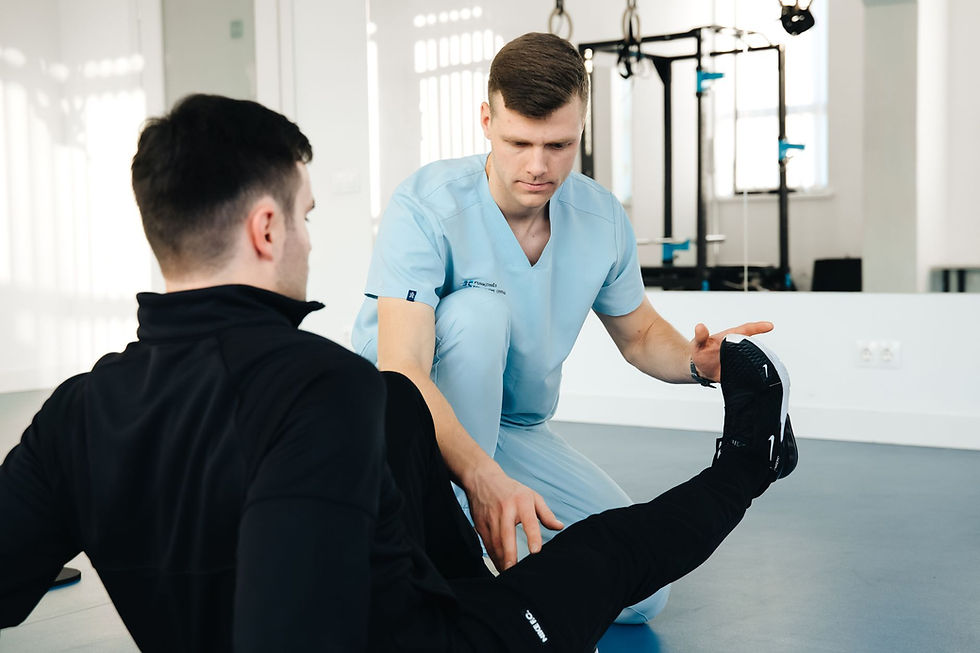
That applies equally to rehabilitation. Open Shoulder’s proposition, as described in the release, is to make home exercise visible to clinicians through tracked activity and connected equipment. FREE Bionics is said to be pursuing an initially lower-burden route into the U.S. before introducing a more complex lower-limb exoskeleton. Both examples point to the same lesson: adoption depends on what a technology allows a provider, therapist or patient to do differently between formal appointments.
The commercial test is local relevance
Taiwan’s strengths in manufacturing, medical hardware and hospital-linked development can create a credible pipeline of health technologies. The Dallas event showed, however, that export success will turn on less visible capabilities: diverse validation data, regulatory judgement, integration expertise, local maintenance and partners who understand purchasing and care delivery.
For prospective U.S. customers, the right question is not whether a device or model is sophisticated. It is whether the supplier can demonstrate relevance to their patient population, deliver the required support and produce evidence that matters to their clinical and commercial decisions.
That is the test Taiwan’s health-tech companies were beginning to address in Dallas.
This article is based on a supplied announcement. It has been edited by Expert View Media for clarity, context and length.


Comments